
Intentional Camera Movement: ICM Settings and How-To

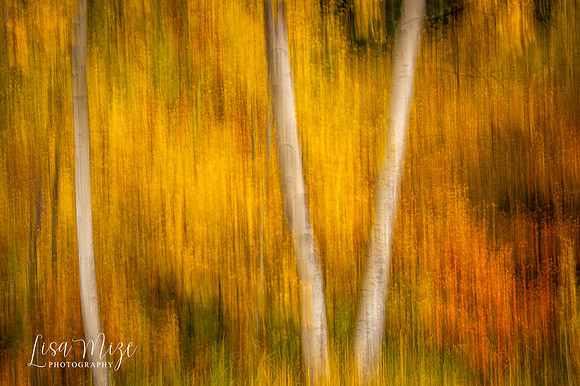
Intentional Camera Movement: How to Paint with Your Camera
I remember hearing "ICM, ICM" and thinking, I don't know what ICM is! It stands for intentional camera movement, and now it's one of my favorite ways to shoot!
You deliberately move your camera during a long exposure. That creates a super yummy, painterly, impressionistic look that's often compared to an oil painting or watercolor. All that work we do to hold the camera still? This is the exact opposite!
What should you photograph?
Pretty much anything. Here's where I'd start:
|
Subject |
Try this movement |
|---|---|
|
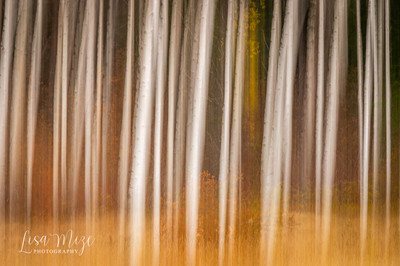
Forests and trees |
Vertical, for painterly trunks and canopy |
|
Meadows and wildflowers |
Horizontal sweep through the color |
|
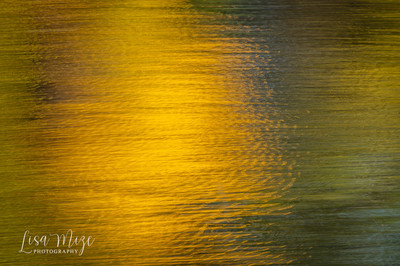
Waterfalls and rivers |
Along the direction of the flow |
|
Autumn foliage |
Circular or diagonal, for a color explosion |
|
Coastal scenes |
Horizontal sweep, moody and atmospheric |
|
Sunrise and sunset |
Radial zooms and sweeps through the color |
The best settings for ICM
|
Setting |
Starting point |
|---|---|
|
Shutter speed |
1/4 second to 2 seconds |
|
ISO |
100 to 400 |
|
Aperture |
f/8 to f/16 |
|
ND filter |
6-stop in bright daylight |
|
Mode |
Manual or Shutter Priority |
I like to stay around f/8 or f/9. That's the sweet spot on my lens, and my colors are richer with better clarity. The middle of the range is usually the sweet spot on most lenses.

Five ways to move your camera
- Vertical: up or down. Best for trees, waterfalls and tall subjects.
- Horizontal: side to side. Best for landscapes, ocean and meadows.
- Diagonal: dynamic energy, great for dramatic scenes.
- Circular: spin your camera for a spiraling, dreamlike effect.
- Freestyle: do whatever you want! The results are organic and unpredictable.
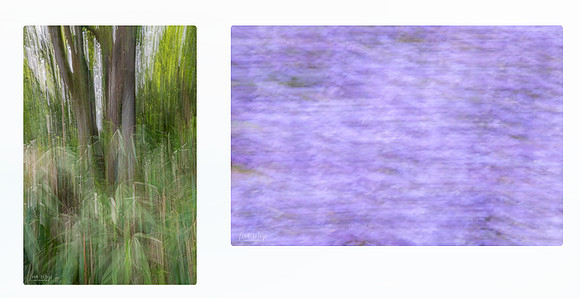
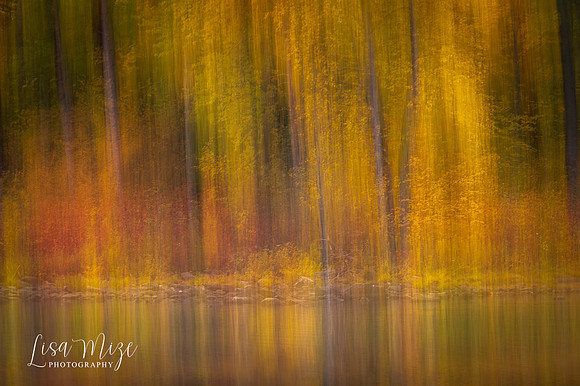
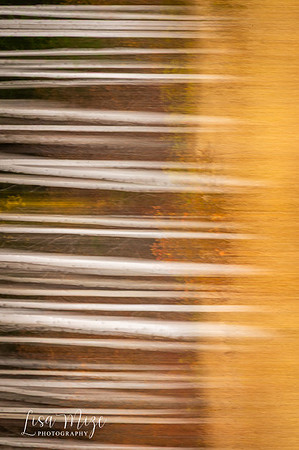
Here are two of mine from Kubota Garden. For the tree, I panned my camera up as I took the image. For the huge area of purple flowers, I moved my camera left to right.
The secret: speed changes everything
This is the part I really want you to see. All five of these images are the same bush of purple flowers, all taken at 0.6 seconds.
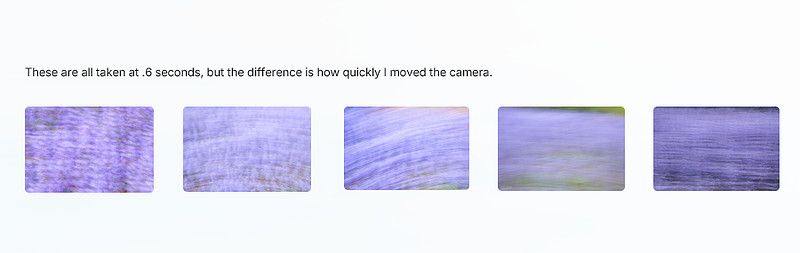
Same flowers. Same shutter speed. So why do they look completely different? It's how quickly I moved my camera. I moved slowly for the first one, and the speed picks up as you go. By the fourth one I was moving really fast, and it looks like somebody took a paintbrush and wiped it across the frame.
So you have a lot of control here. I liked something about every one of these. None is right and none is wrong. They each have their own feel!
Try this at home
Pick one subject. Set 0.6 seconds, or whatever gets you a good exposure close to that. Now take five frames, moving a little faster each time. You'll learn more from those five frames than from reading about it!
Creative ideas to try next
- Photograph into a light source for dramatic streaks.
- Go out after rain, because wet surfaces multiply color and reflection.
- Combine ICM with a sharp image as a double exposure.
- Keep your "wrong" results. They're often the most interesting ones.
Finish it in editing
This is where the fun continues. Do you want richer colors, or more pastel? Do you want to remove clarity and really soften it? Do you want to see just a tiny bit of the flowers here and there? Try it and see how it feels.
One honest note: there's still a difference between a beautiful ICM image and one that just looks like an accident. That comes with practice. You'll have ones you love and ones you don't, and that's okay!
Your next step: Want a place to practice and keep track of what you learn? My printable Abstract Nature Field Workbook has an ICM assignment and a shot log ready to go!